 Halifax Citadel 1994
 Fort Anne 1992
 Fort Ellis 1987
 Stewiacke parade 1987
 Middleton 1991
 Shelburne 1990
 Fort Anne 1990
 Pte. REDDEN Shelburne 1992
 Fort Sackville 1993
 Saint John 1990
 1990
1990 Fort Anne 1986
 Stewiacke 1986
 Halifax 1987
 Hardwoodlands 1991


 Halifax Citadel 1994Fort Anne 1992Fort Ellis 1987Stewiacke parade 1987Middleton 1991Shelburne 1990Fort Anne 1990Pte. REDDEN Shelburne 1992Fort Sackville 1993Saint John 19901990Fort Anne 1986Stewiacke 1986Halifax 1987Hardwoodlands 1991
 Prescot house, built adjacent to Fort Sackville
 where we set up our camp

 From Brendan Morrissey Quebec 1775 Osprey Campaign 128 comes the Battle of Trois Rivieres. This action took place on June 6, 1776. An American force under General Thompson attempted to attack Allan McLean of the 1st Battalion Royal Highland Emigrants. What he found at Trois Revieres was something different.
  The British force consisted of 29th Regiment, 9th Regiment, 20th Regiment, and 62nd Regiment, Royal Highland Emigrants, Montreal Militia, some Canadien volunteers and Amerindian warriors.
 The Americans consisted of a mixed bag of troops from different units in the colonial army. The morale of this group was poor as they had not been paid, the British had sent troops from Halifax, and the war was not going so well for them.
  On turn one, the Americans were led into a swamp by a Canadien farmer, who rightly believed the Americans to be the invaders, not the liberators from British rule. They advanced to engage the British left which consisted of the Amerindian warriors.
 The British Light Infantry companies began to snipe at the advancing Americans, but were forced back by formed units of Americans.
  The Amerindians began to take casualties for the American riflemen and fell back to leave the battlefield. The Highlanders and Loyalists then formed the Left of the British line. The centre was then made up of Loyalist militia supported by an RA gun.
 The British right consisted of the centre companies of the British regulars as well as a composite Grenadier battalion from all the British regiments.
 The Highlanders advance on the left. The Americans form a line to keep up a brisk fire on the advancing British.
 Quebec city militia, 1775. The English speaking militia.
 1st Battalion,Royal Highland Emigrants (www.cmhg.gc.ca) However the officers would look like this
 British soldier in winter uniform
 American rifleman, a few of these made it to Quebec with Arnold's units.
 American Army officer 1775
 American soldiers trying to survive a Canadian winter. Not easy when it's usually -20c in January!
 Daniel's painting of the British repulsing the Americans. (www.cmhg.gc.ca)
 (photo courtsey of King's Orange Rangers)
 (photo courtsey of King's Orange Rangers)
 (photo courtsey of New France/Old England site)
 (photo courtsey of artist)
 (photo courtsey of artist)
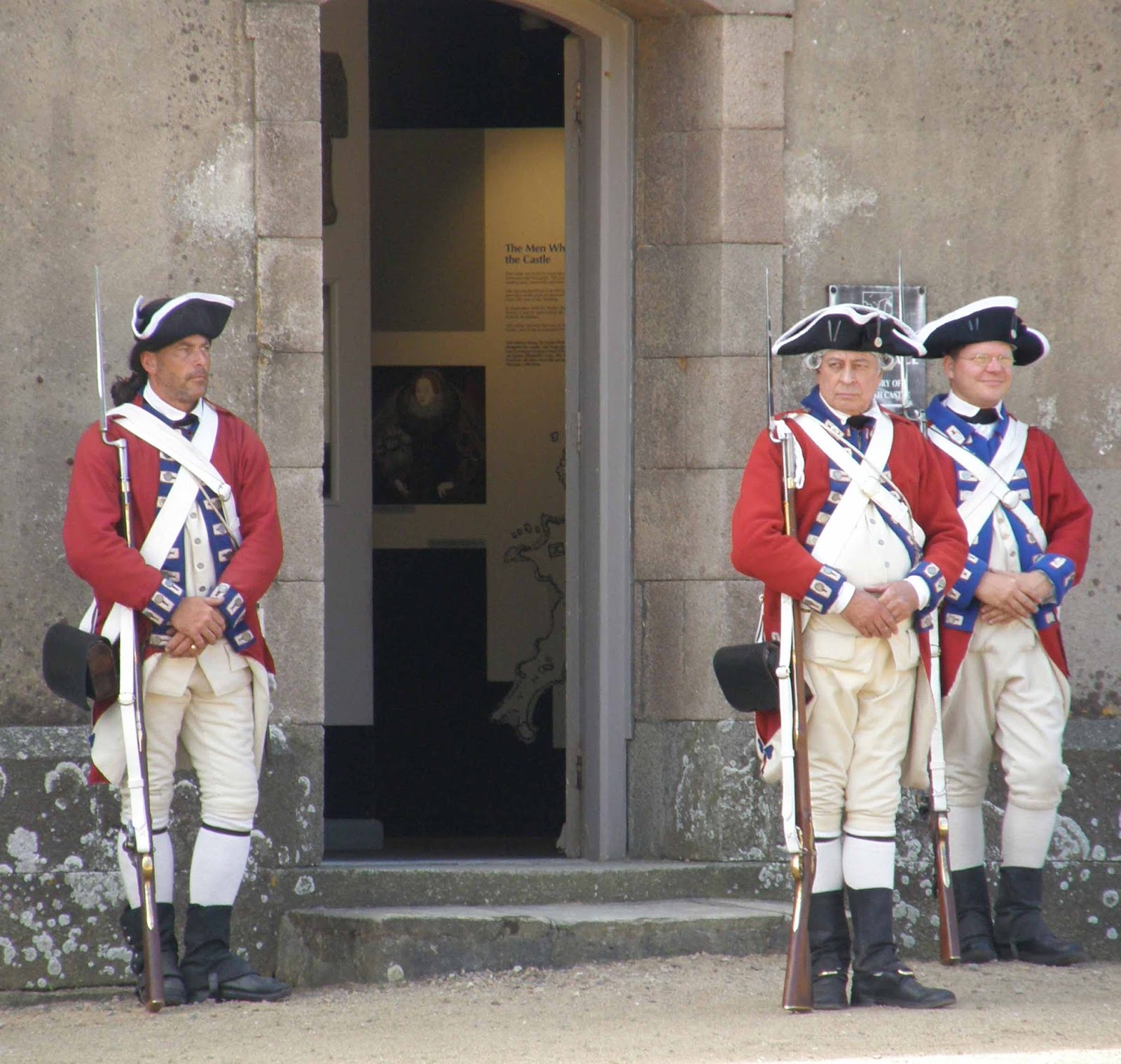 (photos courtsey of the Jersey Militia, UK)


 Stirling's Division
 4th Battalion, Royal Artillery